Introduction: The Hidden Cost of Over-Grinding
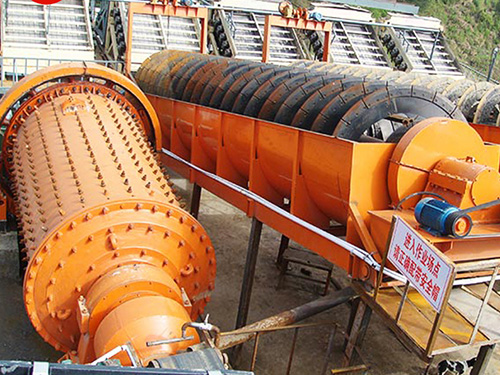
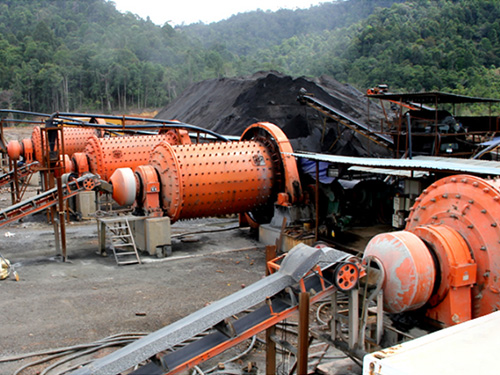
In mineral processing, a ball mill is the workhorse of size reduction. But when grinding goes too far, over-grinding occurs. This creates ultrafine “slimes,” increases energy consumption by up to 30%, reduces downstream recovery (especially in flotation), and accelerates liner wear.
Preventing over-grinding isn’t just about quality—it’s about profitability. Below are seven proven strategies to keep your ball mill in the optimal grinding zone.
1. Optimize Ball Charge & Size Distribution
Using balls that are too small or too large can cause over-grinding.
Solution: Use a graded ball charge (e.g., mixed sizes like 40mm, 50mm, 60mm). For coarse feed, add larger balls to break particles quickly. For fine feed, use smaller balls to avoid unnecessary fines.
Pro tip: Perform a ball charge audit monthly. Ensure the top ball size follows the formula: (where is feed size in microns).
2. Control Mill Retention Time
Longer retention increases the risk of over-grinding.
Solution: Adjust the discharge grate slot size or use a diaphragm between chambers. A slot opening of 6–10mm is typical for coarse grinding; 4–6mm for finer circuits.
Operational check: Monitor the mill power draw vs. throughput. A sudden drop in power at constant feed rate often indicates over-grinding (the mill is “over-filled” with fines).
3. Implement a Closed-Circuit with Classifier
Open-circuit mills are highly prone to over-grinding because all material stays until discharged.
Solution: Convert to a closed circuit with a hydrocyclone or screen. Oversize returns to the mill; undersize (desired product) is removed immediately.
Result: This reduces over-grinding by up to 50% while increasing throughput by 15–25%.
4. Adjust Mill Speed (RPM)
Running too fast centrifuges the balls—they no longer cascade but stick to the shell, causing impact instead of attrition. Running too slow reduces breakage but can still over-grind brittle materials.
Solution: Operate at 65–75% of critical speed. For soft or friable ores (e.g., talc, coal), lean toward 65–68%. For hard ores, 72–75%.
Monitor: Use a tachometer and adjust VFD settings if available.
5. Control Feed Rate & Particle Size Distribution
A sudden drop in feed rate (e.g., upstream crusher issue) leaves the mill grinding air or excess media—a perfect recipe for over-grinding.
Solution: Maintain a consistent feed rate ±5%. Install a mass flow meter on the conveyor. If feed gets coarser, increase ball size or speed; if finer, reduce retention time.
Rule of thumb: Never run the mill below 60% of its design feed rate for more than 30 minutes.
6. Use Grinding Aids (for Cement & Industrial Minerals)
Over-grinding often happens due to particle agglomeration—fines stick to balls and liners, creating a “cushion” that requires more energy, producing even more fines.
Solution: Add 0.01–0.05% of a grinding aid (e.g., triethanolamine, glycol-based additives). These chemicals reduce surface energy, prevent coating, and improve flow.
Note: Effective for cement, limestone, and clinker. Test compatibility with downstream flotation reagents.
7. Real-Time Monitoring with PSD Sensors
You can’t prevent what you don’t measure.
Solution: Install an inline particle size analyzer (e.g., laser diffraction or ultrasonic) on the mill discharge or cyclone overflow. Set alarms when % passing 325 mesh (44 µm) exceeds your target by 5%.
Action trigger: When over-grinding is detected, automatically reduce mill speed by 2–3% or increase feed rate slightly.
Common Over-Grinding Symptoms (Troubleshooting Table)
| Symptom | Likely Cause | Immediate Fix |
|---|---|---|
| High % of -400 mesh (>30%) | Too long retention | Widen discharge slots |
| Mill power low, throughput high | Over-grinding / fines cushion | Reduce ball charge or speed |
| Flotation recovery drops | Slime coating from fines | Install hydrocyclone |
| Excessive liner wear in fine chamber | Impact from small balls on fine material | Use smaller media or reduce speed |
Conclusion: Balance is Key
Preventing over-grinding isn’t about stopping grinding—it’s about stopping at the right point. By controlling ball size, retention time, circuit type, and real-time data, you can reduce energy waste by 15–30%, extend liner life, and improve downstream recovery.
Start with a closed circuit and a particle size analyzer. Then fine-tune ball charge and speed. Your ball mill—and your bottom line—will thank you.
FAQs
Q: Can over-grinding damage the ball mill itself?
A: Yes. Over-grinding produces fine particles that pack into liners and grates, reducing discharge area and causing mill overfilling, which strains the motor and trunnion bearings.
Q: What’s the fastest way to reduce over-grinding in an open-circuit mill?
A: Increase feed rate slightly (if upstream allows) or reduce mill speed by 5%. Better yet, add a simple vibrating screen after the mill.
Q: Are ceramic balls better for preventing over-grinding?
A: For fine grinding (down to 5–10 microns), yes. Ceramic balls have lower specific gravity than steel, producing more attrition than impact, which reduces over-grinding of soft minerals.