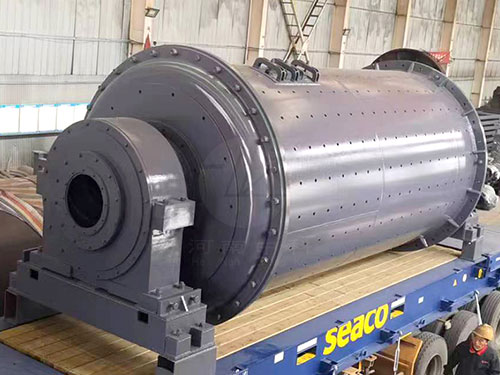
You’ve invested in a high-quality ball mill, but your final product looks like a mix of dust and pebbles. Uneven particle sizing isn't just a quality issue—it wastes energy and drives up operational costs. If your mill is producing a bimodal distribution (some particles too coarse, others over-ground), you are likely facing one of five mechanical or operational errors. Let’s troubleshoot.
1. Incorrect Ball Charge & Size Distribution
The most common culprit is poor ball size selection. Using only large balls (e.g., 90mm) creates a "pounding" effect, leaving coarse tails. Conversely, only using small balls lacks the impact force to break larger feed particles.
The Fix: Use a graded ball charge (e.g., a mix of 90mm, 70mm, and 50mm). The "Rule of Thumb" suggests balls should be 3–5% of the mill volume, with sizes ranging from 25mm to 90mm depending on feed size.
2. Improper Mill Speed
Running your mill at the wrong RPM drastically affects grinding efficiency. At too low a speed, balls merely slide or tumble over each other without cascading. At too high a speed, centrifugal force pins the balls to the mill wall—resulting in zero grinding action.
The Fix: Calculate the critical speed. Optimal grinding occurs at 65–75% of critical speed. Use a tachometer to verify your rotation.
3. Excessive Feed Rate
Are you pushing your mill beyond its capacity? Overfeeding creates a "blanket" of material that cushions the balls. The balls cannot impact the ore/grains directly, leading to a discharge that is both over-crushed and under-crushed.
The Fix: Reduce feed rate until the mill discharge maintains a steady particle size curve. Monitor motor amperage—a sudden drop often indicates cushioning.
4. Suboptimal Slurry Density (For Wet Milling)
If you operate a wet ball mill, viscosity is critical. A slurry that is too thick (high solids) prevents proper ball movement. A slurry that is too thin (low solids) accelerates ball wear and "sliming" (over-grinding fines).
The Fix: Maintain a solids content of 65–75% by weight for hard ore and 70–80% for softer materials.
5. Worn Liner Profile
Lifters wear out over time. When the liner becomes smooth or distorted, it fails to lift balls high enough for a proper cascade.
The Fix: Inspect liners monthly. Replace them when the lifter height is reduced by 60-70% of the original design.
Conclusion
Uneven particle size is a symptom of a mismatch between your mill's mechanics and your material. Start by checking the ball size distribution and mill speed first—these yield the fastest ROI. Regular maintenance audits prevent the "fines and chunks" problem before it ruins your next shift.
Call to Action: Need an expert review of your mill parameters? Contact our engineering team for a free vibration analysis.