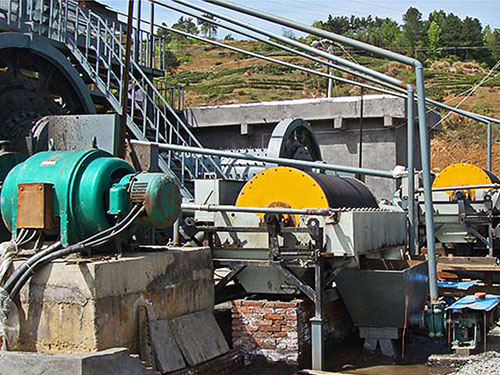
In the gold mining industry, the journey from extracted ore to a precious doré bar is a complex series of physical and chemical processes. One of the most critical steps is grinding, where massive chunks of rock are reduced to a fine powder. The goal is to liberate microscopic gold particles from the surrounding waste rock (gangue), making them accessible for recovery methods like cyanidation or flotation.
The ball mill is the most iconic and widely used machine for this job. But is it always the right choice? This article explores the suitability of ball mills for gold ore processing, examining their advantages, limitations, and how they fit into the modern gold recovery flowsheet.
The Golden Role of the Ball Mill in Gold Processing
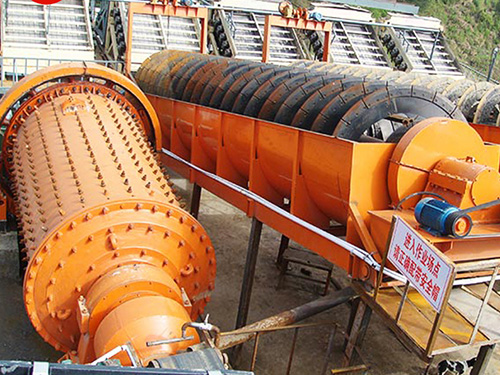
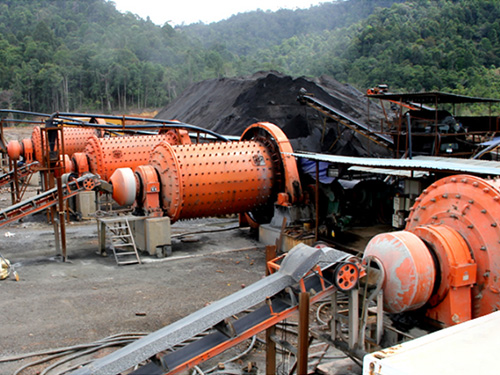
A ball mill is a cylindrical device that rotates around its horizontal axis, partially filled with grinding media—usually steel balls or rods . As the mill rotates, the balls are lifted and then cascade or cataract down, crushing and grinding the ore particles through impact and attrition .
In a typical gold processing plant, the ball mill is the workhorse of the "mashing" stage . It follows the primary crushing stage (e.g., jaw or cone crusher), taking ore crushed to about minus 1 inch and grinding it down to a fine slurry, often targeting a particle size where 80% of the material passes a 75-micron (200 mesh) screen . This fine particle size is essential for exposing gold particles for subsequent recovery.
As one industry source notes, the purpose of grinding is not only to provide a suitable feed size for further processing but also to release valuable minerals from the gangue . The ball mill excels at this, preparing the ore for processes like:
Cyanidation (CIL/CIP): Fine grinding maximizes the surface area for cyanide solution to dissolve the gold .
Flotation: It liberates gold-bearing sulfides so they can be separated from waste rock .
Gravity Concentration: It frees coarse gold particles so they can be recovered early in the process by equipment like jigs or shaking tables .
Advantages of Using Ball Mills for Gold Ore
Ball mills have remained the industry standard for decades, and for good reason. Their suitability for gold ore processing is built on several key strengths:
Proven and Reliable Technology: The ball mill is a mature technology with a global track record of reliability . Operators understand its mechanics, maintenance, and operation, reducing the risk associated with newer, less-proven technologies.
High Grinding Efficiency for Hard Ores: Gold ores, particularly hard rock deposits, are often abrasive and tough. Ball mills are specifically designed to handle this, using the high kinetic energy of steel balls to break down the hardest materials .
Superior Product Fineness: When gold is finely disseminated within sulfide minerals (refractory gold), achieving a very fine grind is non-negotiable. Ball mills are capable of producing the ultra-fine particles (down to 0.074 mm or less) necessary to liberate this encapsulated gold .
Scalability: Ball mills are available in a vast range of sizes. A small processing plant treating 50 tons per day might use a small ball mill, while a large industrial operation can employ massive mills processing hundreds of tons per hour . For instance, a 1.5m x 4.6m ball mill can process between 20 and 50 tons per hour, with larger configurations handling up to 70 tph or more .
Integration with Downstream Processes: The slurry produced by a wet ball mill is ideally suited for downstream processes like flotation, Carbon-in-Leach (CIL), or Carbon-in-Pulp (CIP), creating a seamless processing circuit .
A prime example of this integration is the Rainy River Mine in Ontario, Canada. Their process begins with crushing, followed by a SAG mill, and then "a ball mill grinds the material even finer" before it proceeds to gravity concentration and cyanide leaching tanks . This real-world application underscores the ball mill's essential role in a conventional gold recovery flowsheet.
Limitations and Modern Alternatives
Despite its dominance, the ball mill is not a perfect solution for every scenario, particularly as gold ores become more complex. Recent research highlights some of its limitations, especially in fine and ultra-fine grinding applications .
High Energy Consumption: Grinding is one of the most energy-intensive steps in mineral processing. Ball mills, especially when used for fine grinding, can consume significant power . Studies have shown that while a ball mill is effective for primary and secondary grinding, its efficiency can drop when grinding to very fine sizes (e.g., where 80% is less than 75 μm) . In these cases, the material can escape the impact zone of the balls, leading to low efficiency and high energy consumption .
Not Always Optimal for Ultra-Fine Grinding: For refractory gold ores that require ultra-fine grinding to liberate values, stirred mills (both vertical and horizontal) are proving to be more efficient. A 2024 study published in Minerals Engineering directly compared ball mills, vertical stirred mills, and horizontal stirred mills for grinding a gold ore concentrate . The results showed that for the same grinding fineness, the horizontal stirred mill produced a product with a more uniform particle size distribution, a larger specific surface area, and a 20% higher gold leaching rate compared to the ball mill product . This suggests that while a ball mill can grind the ore, a stirred mill may do so in a way that better exposes the gold to the leaching solution.
Higher Capital and Maintenance Costs: Ball mills have a large footprint and require significant civil works for installation . They also have high maintenance demands, including regular liner changes and topping up of grinding media, which contributes to operational costs