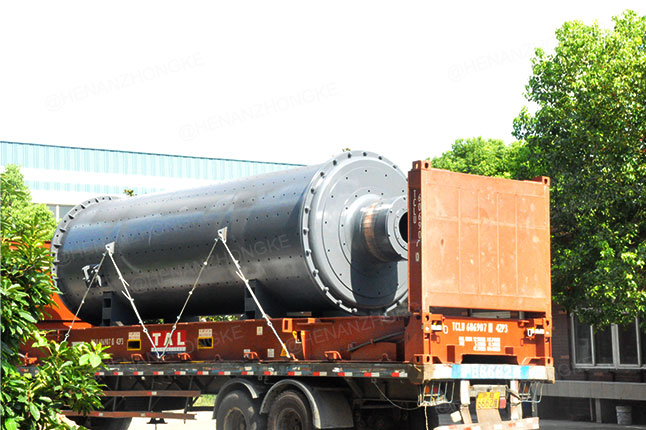
In the world of mineral processing, cement production, and advanced material manufacturing, the ball mill is a cornerstone of efficiency. But operating this powerful machine isn't as simple as filling it with material and turning it on. One critical question dictates its performance, energy consumption, and final product quality: What rotation speed is best for a ball mill?
The short answer is that the optimal speed is typically 65% to 75% of the mill’s critical speed (Nc). However, this is a starting point, not a universal rule. The "best" speed is a precise balance that depends on the mill's internal design, the type of grinding media used, and the properties of the material being processed.
This comprehensive guide will break down the science behind ball mill rotation speed, explain how to calculate it, and provide practical advice for optimizing your operation for maximum efficiency and output.
Understanding Critical Speed: The Foundation of Mill Operation
To understand the "best" speed, you must first grasp the concept of critical speed.
Critical Speed (Nc) is the rotational velocity at which the contents of the mill (the grinding media and the material) begin to centrifuge against the inner walls of the mill. At this point, the grinding media do not fall back but instead rotate with the shell, rendering the mill virtually useless for grinding action. There is no cascading or cataracting impact—the essential mechanisms for size reduction.
The formula for calculating critical speed is:
Nc = 42.3 / √(D - d)
Where:
Nc = Critical speed in revolutions per minute (RPM)
D = Internal diameter of the mill in meters
d = Diameter of the grinding media (balls) in meters
This formula shows that critical speed is inversely proportional to the square root of the mill's diameter. Larger-diameter mills have a lower critical speed than smaller-diameter mills.
The Three States of Mill Operation
Based on the operating speed relative to its critical speed, a ball mill functions in three distinct states:
1. Slow Speed (Cascading) - < 65% Nc
Action: The grinding media are lifted a short distance before rolling or cascading down the free surface of the other media.
Effect: This creates primarily abrasive and attrition grinding, which is finer but less impactful. It is suitable for ultra-fine grinding but can be inefficient for coarse feed and may lead to liner wear.
2. Optimal Speed (Cataracting) - 65% to 75% Nc
Action: This is the sweet spot for most operations. The media are lifted high enough to be thrown clear across the mill, following a parabolic trajectory before impacting on the toe of the media pile on the opposite side.
Effect: This combines the benefits of abrasive grinding from cascading with powerful impact fracture from cataracting. It provides the most efficient size reduction, optimal energy utilization, and the best overall product size distribution.
3. High Speed (Centrifuging) - > Nc
Action: The media are pinned to the shell walls due to centrifugal force and do not fall back.
Effect: Grinding action ceases completely. This state is highly undesirable as it wastes energy, causes excessive wear on the mill liners and media, and produces no meaningful size reduction.
How to Find the Best Speed for Your Ball Mill
While the 65-75% Nc range is a proven guideline, the exact optimal point within this range depends on several factors:
Mill Lining: The design of the mill's lifter bars plays a crucial role. Lifters are designed to grip the grinding media and enhance their lift. Worn-out lifters will reduce the effective lift, potentially requiring a slightly higher RPM to achieve the same cataracting action.
Grinding Media Fill Level: The percentage of the mill volume filled with media (typically 30-40%) affects the load dynamics. An overfilled mill may not achieve proper cataracting even at the correct speed.
Media Size and Density: Larger, denser media (e.g., steel balls) have more mass and require more centrifugal force to lift. The formula for critical speed already accounts for media size (
d), but the density can influence the optimal operating point slightly.Feed Material Characteristics: Hard, coarse materials often benefit from higher-impact forces found at the upper end of the optimal range (~75% Nc). Softer, friable materials might be better ground with more cascading action at a slightly lower speed to avoid over-grinding.
Mill Diameter: As per the critical speed formula, larger mills must operate at a lower absolute RPM to stay within the optimal percentage range.
Practical Calculation Example:
Let’s calculate the optimal operating speed for a ball mill with an internal diameter (D) of 2 meters using grinding balls (d) with a diameter of 50 mm (0.05 m).
Calculate Critical Speed (Nc):
Nc = 42.3 / √(2 - 0.05) ≈ 42.3 / √1.95 ≈ 42.3 / 1.396 ≈ 30.3 RPMFind the Optimal Operating Range (65% - 75% of Nc):
65% of Nc: 0.65 * 30.3 ≈ 19.7 RPM
75% of Nc: 0.75 * 30.3 ≈ 22.7 RPM
Therefore, the best operating speed for this specific mill would be between approximately 20 and 23 RPM.
Consequences of Choosing the Wrong Speed
Too Slow: Results in inefficient grinding, low throughput, and increased liner wear due to excessive sliding abrasion.
Too Fast (but below critical): Can lead to overly violent impacts, increasing media consumption (ball and liner wear) and energy costs without a proportional increase in grinding efficiency. It can also cause premature mechanical failure.
At or Above Critical: Complete loss of grinding function, massive energy waste, and severe damage to the mill and its components.
Conclusion: Efficiency is a Balancing Act
There is no single magic number for the best ball mill rotation speed. The ideal RPM is a calculated value that sits within the 65% to 75% of critical speed range and is then fine-tuned based on your specific operational parameters.
To achieve peak performance:
Calculate your mill’s critical speed.
Start operations in the middle of the optimal range (e.g., 70% Nc).
Monitor and Adjust based on product fineness, power draw, noise, and wear rates. A modern variable frequency drive (VFD) is an invaluable tool for this fine-tuning process.
By mastering the relationship between rotation speed and grinding action, you can unlock significant gains in productivity, reduce your operating costs, and extend the lifespan of your critical grinding equipment.